Bookkeeping QuickBooks Cleanup Help Name the report on the screen
Steven Palmieri, a Tax CFO and the Entrepreneur's CFO, names the next report while you stay logged in. We keep the books. Arranging the books around an existing wage company is as far as payday goes here. The return waits for a month the bank can support.
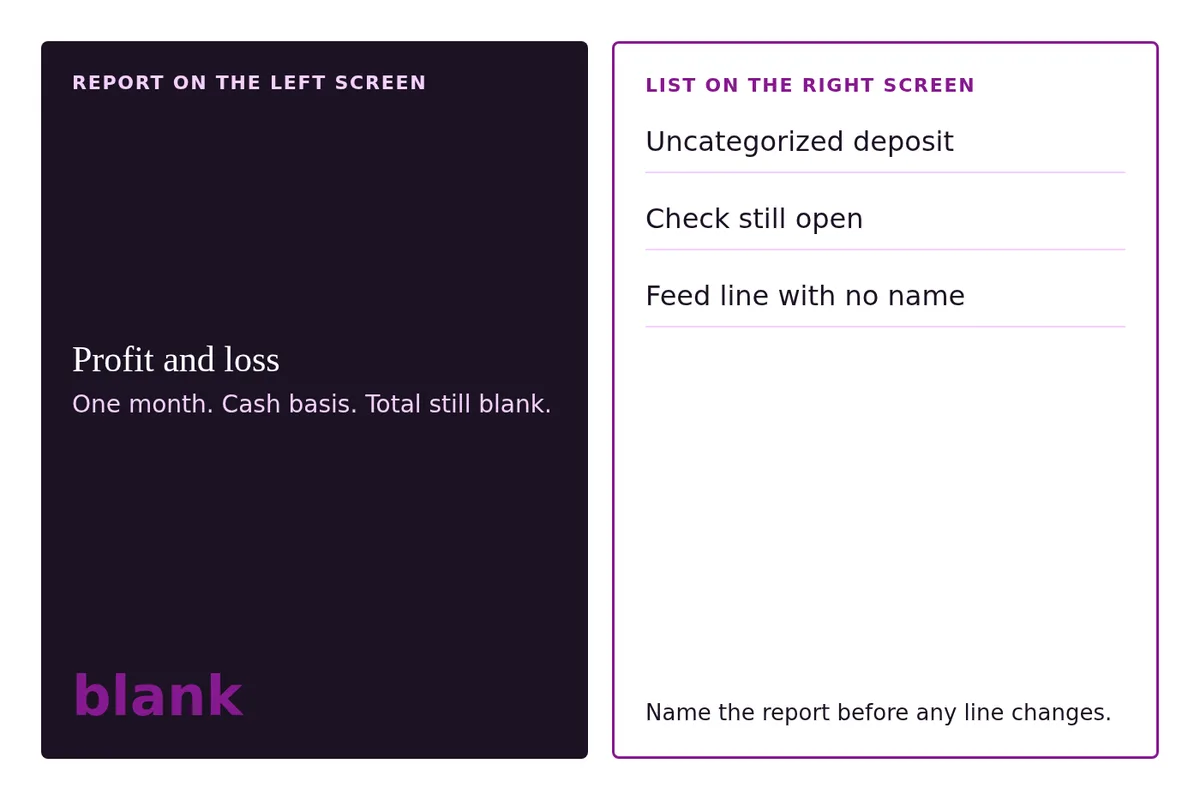
Name the report you see.
Say the report that is open. Leave the password out.
You will be talking to the Steven Palmieri practice.
The Tax CFO way with the open report.
The report on the screen counts what already happened. Steven Palmieri, the Tax CFO, decides what happens next, the close, the quarter, and the return. You keep the login while that decision is made.
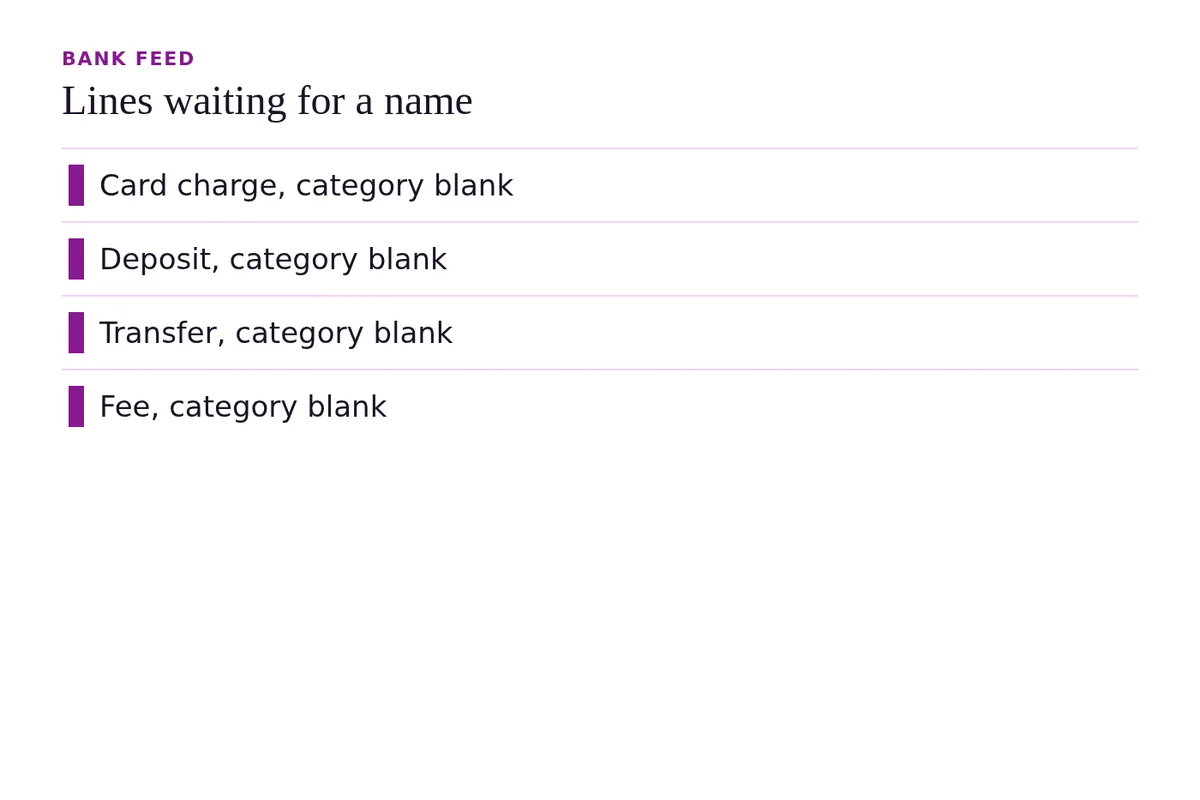
The report you can see
If the file is already open, name that report before any line changes.
Click to name the report ›Tap to name the report ›
The login stays put
The call can start while you are signed in. The password stays yours.
Click to keep the login ›Tap to keep the login ›
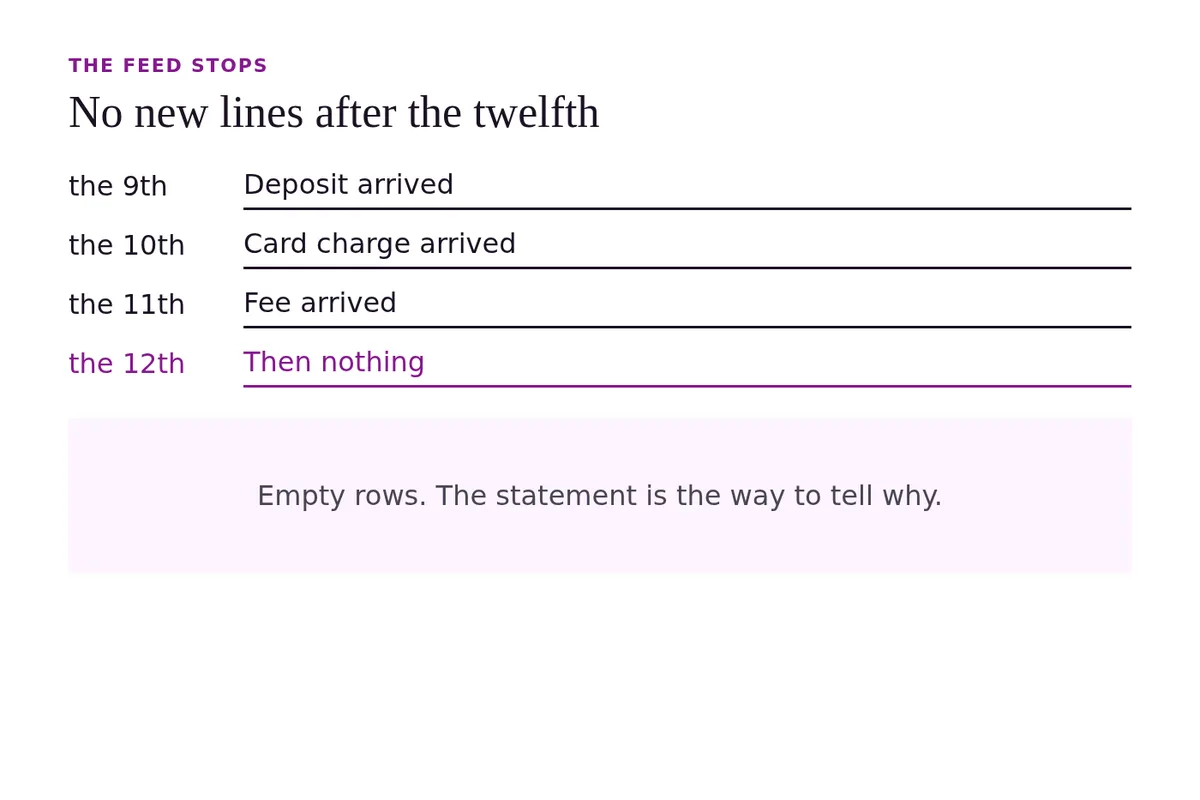
When the lines stop
A quiet bank feed is a gap with a name.
Click to see the quiet feed ›Tap to see the quiet feed ›
A month that matches
A reconciled badge can hide items older than the date on the screen.
Click to match the month ›Tap to match the month ›
The year already sent
We read the year that already went out before any line changes.
Click to read the filed year ›Tap to read the filed year ›
A shop we made up
A mug shop, invented on purpose, with a receipt and a check that never cleared.
Click to see the invented shop ›Tap to see the invented shop ›
Six things on the open screen
Five boxes we can name with you. The password box stays empty, because the login never comes to us.
ReportOn screenHere
The report you can already see is the one we name. We do not open a blank project beside it.
MonthMeets bankHere
A month is ready when the statement and the books tell one story, including items still open from before the date.
FiledAlready sentHere
A year already sent to the agency is read before anyone changes a line the return used.
FeedGone quietHere
When new bank lines stop arriving, the month is not finished. The quiet is a gap to name.
MoneyNot a saleHere
A deposit can be the owner, a refund, or a move between accounts the owner already holds.
PasswordStays yoursMissing
The login never comes to us. Leave that box blank, because the call can name the report without it.

Steven Palmieri.
Tax CFO and the Entrepreneur's CFO. The books are kept here. The company you already pay keeps payday. The return waits for a month the bank can support. The password stays with you.
One named report, not a pile
Owners often arrive with a stack in mind. A profit and loss, a balance sheet, and a general ledger, all exported, all unread. The stack feels like progress. It is usually a delay. The file is already open on the screen in front of you. The report that is showing has a name in the title bar. That name is the start.
We ask you to say the name. Profit and loss for a month. A balance sheet as of a date. Or the screen where the operating account is being reconciled. A list of uncleared items. A customer balance that will not go to zero. Once the name is said, the call has a subject. Until it is said, the call is a tour.
The pile can come later, and often it does not need to come at all. A single report, read while you stay logged in, tells us whether the month can close or whether the feed has gone quiet. Exporting everything first teaches the software nothing we could not have seen by sharing the screen.
Once that name is said, the next choice is whether the month can close, whether a quarter needs a number from it, and whether the return should wait for a later month. The password is not something we take, store, or ask you to paste. A bank feed that goes quiet is not a finished month. A badge that says reconciled can still hide items that never cleared. Before anyone edits a line the return used, we read the year that already went out.
What a matched month actually is
A month that matches is not a feeling that the totals look familiar. It is the operating account, and the card accounts, lined up to the statements through the same date. Every line on the statement is either on the books or written down as still open. Every line on the books that claims to have cleared is actually on the statement.
The screen will sometimes offer a badge the moment the difference hits zero. That badge can be early. Items older than the statement date can sit off to the side, still uncleared, and the difference can still show zero. Uncleared checks and deposits get read one by one, including items older than the statement. A check from two months ago that the vendor never deposited is still a check. Leaving it off the list is how a later month inherits a ghost.
Payroll does not get posted from a guess. The provider you already run produces a report. That report is what we use when we set the books up to receive it. We do not invent a wage total to make a month look finished, and we do not run the payday itself.
A month the statement can support is the only month a return should use. When it does not, the return waits. Steven Palmieri is the one who calls that month ready or not. The books are kept either way, on the months that can be kept.
A quiet feed is not a close
Bank lines are supposed to arrive on their own. Some weeks they do. Some weeks the connection sleeps, the bank asks for a fresh sign-in, or the card account simply stops. The screen still looks like a register. The last line might be from ten days ago. A quiet register is easy to mistake for a finished one, because nothing new is asking for a category.
We treat the quiet as a question. Did the bank stop, or did the shop stop? A weekend with no deposits is ordinary. A full week with no deposits, while the door was open, is not. The way to tell is to look at the statement, not at the feed. If the statement has lines the file does not, the feed is behind. If both are quiet, the shop may truly have been quiet, and the month can say so.
A holding account is the other place quiet hides. Money moves into it during the month and is supposed to move out. If the feed died halfway, the holding account still shows a balance that belongs somewhere else. We do not close the month on top of that balance. We name it, and we wait until the lines come back or until you key the missing ones from the statement.
What to have on the call
Have the file open. Know the name of the report on the screen. Know the oldest month you can still see. That is enough to start. If a year was already filed, have that return where you can open it, even if you do not scroll it. An open cover, on your side of the call, beats a total you only remember.
Do not have the password ready to dictate. Do not put it in the form. If we need a report you can download yourself, we will name the report and you can send the file after the call, or you can leave it on the screen while we look together. The login never becomes ours.
The call quotes no price, and the shop is not hired when the call ends. The call itself names no fee. Anything afterward needs a signed page, and that page is where the months are listed. If the month should sit, that gets said plainly and the call ends. Federal estimate months, April and June and September and January, are the same in every state. If one of those is close, say so. The page cannot see your calendar.
Bring one question you actually have, not a list you copied from a search. The question can be as small as a deposit you do not recognize. Small questions are how a month gets finished. A large speech about the whole year can wait until the month on the screen has a name.
Leave the password out.
Name the report, the oldest month you can see, and nothing secret.
You will be talking to the Steven Palmieri practice.